
Science Meets Storytelling at Eureka Talks 2026

Eureka Talks 2026
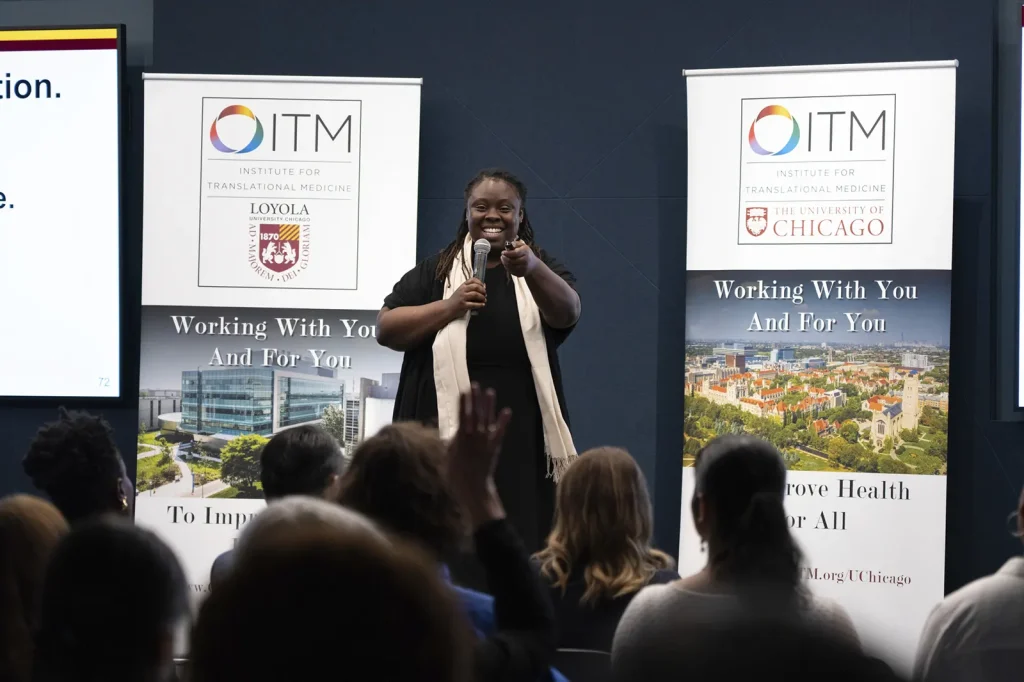
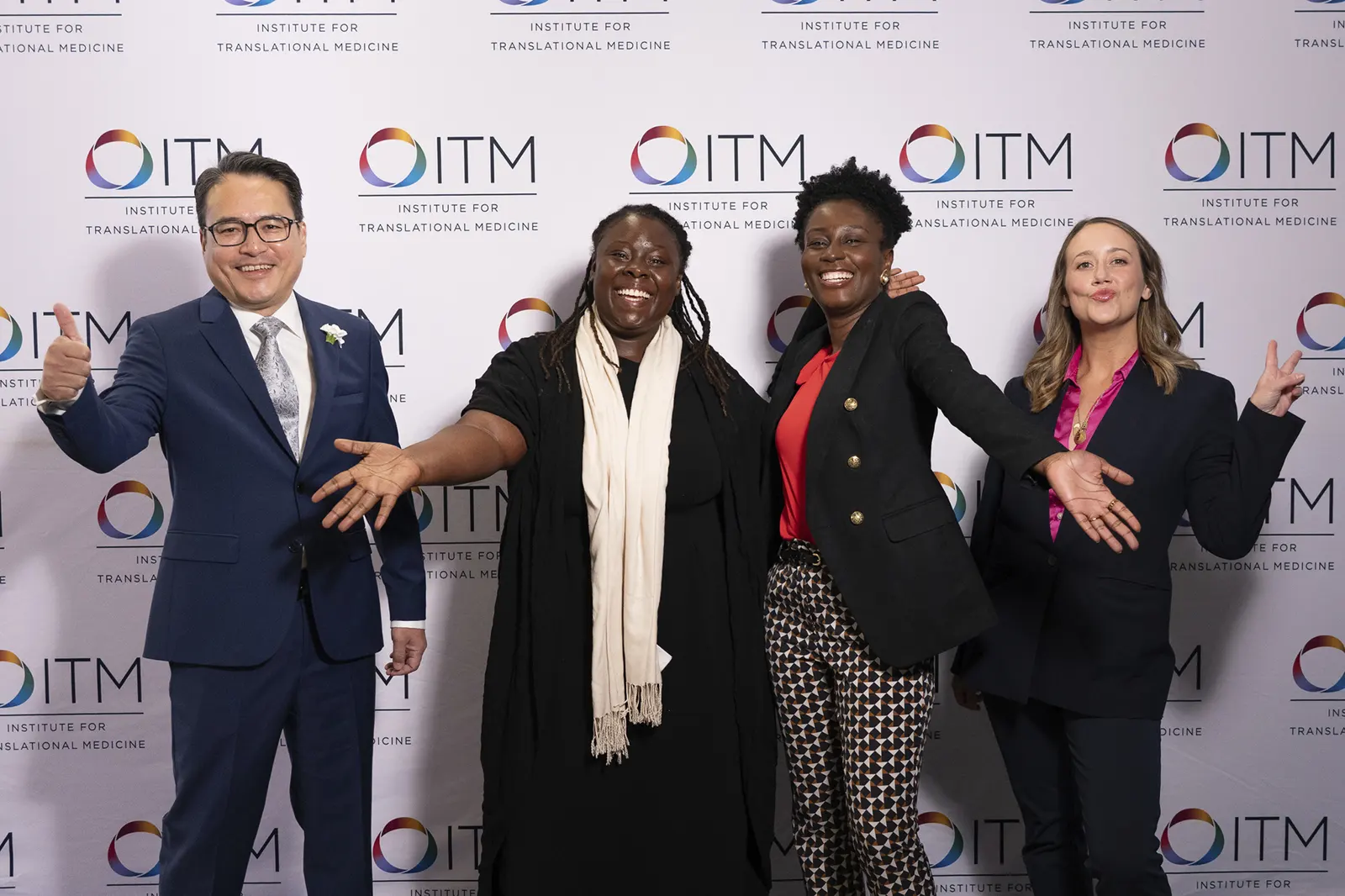
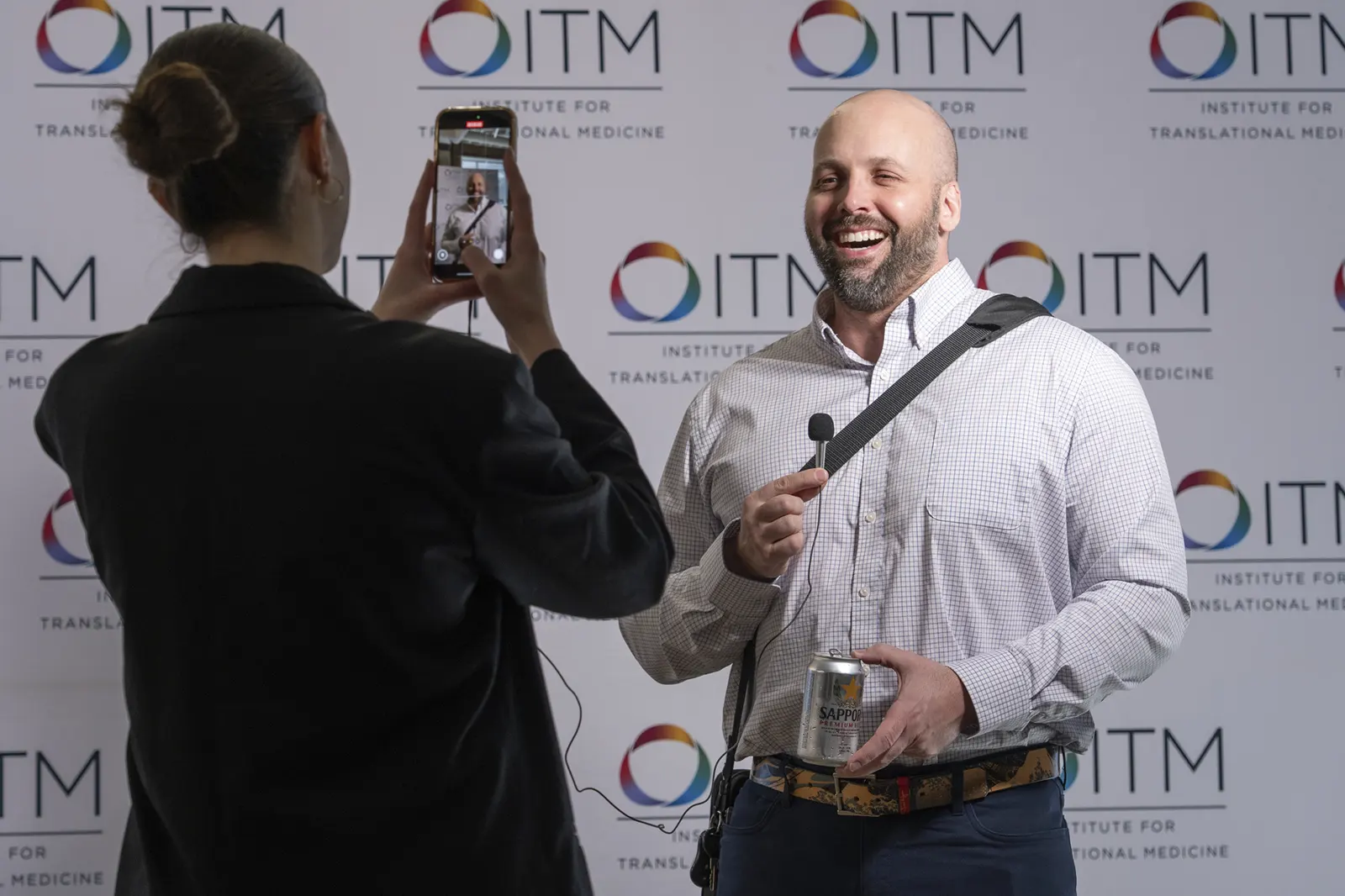
Institute for Translational Medicine (ITM) researchers and Chicago community members gathered downtown on April 17 for Eureka Talks 2026, an annual event that brings groundbreaking scientific research to life through engaging storytelling and live audience engagement.

Four researchers from the University of Chicago and Loyola University Chicago presented their ongoing projects funded by the National Institute of Health’s Career Development (K12) Awards and the ITM administering more than $51 million from the National Institutes of Health (NIH) National Center for Advancing Translational Sciences (NCATS) Clinical and Translational Science Awards (CTSA) Program across six Chicagoland institutions and health systems. The event is the culmination of months of science communication training the researchers received to connect complex science with the general public, including time for live feedback, Q&As, and networking.
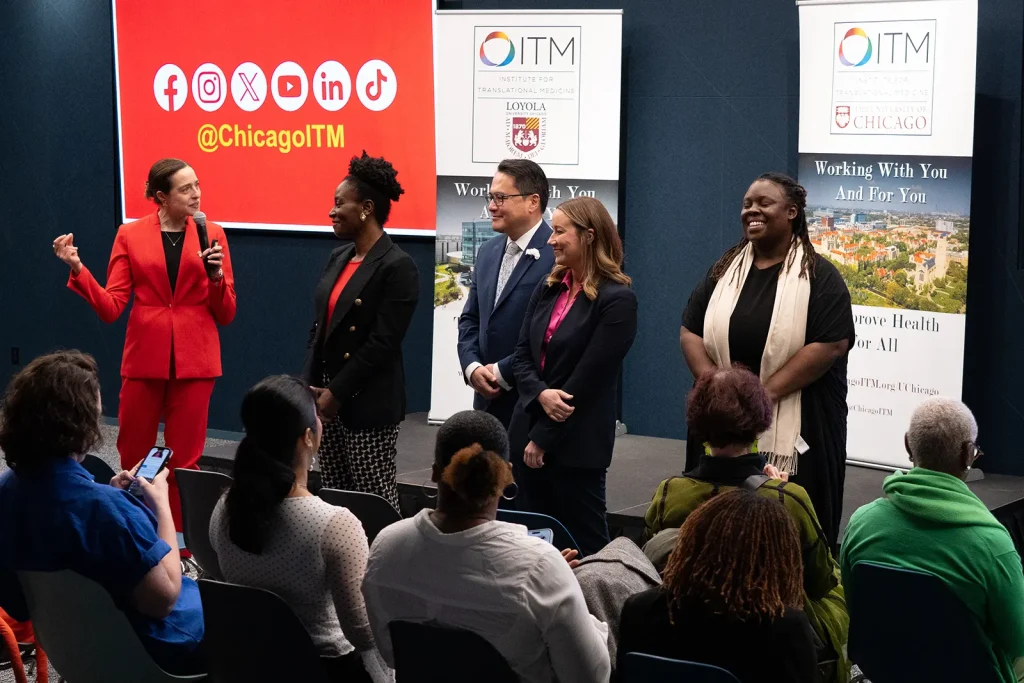
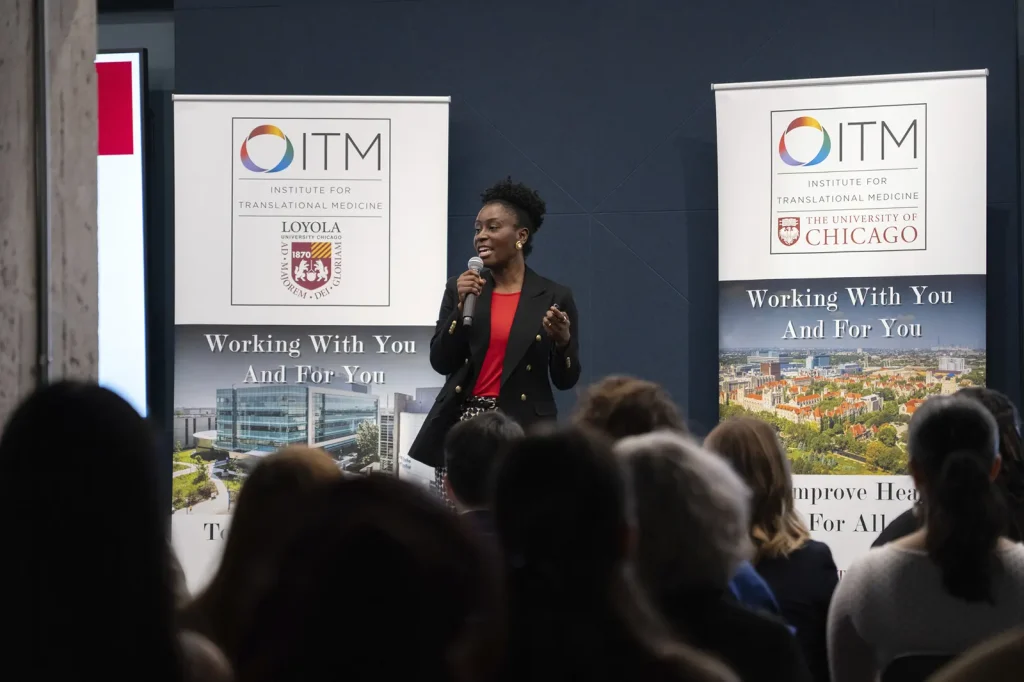
“ You get the opportunity today to hear from researchers who are doing amazing work that has not necessarily been published yet,” said event MC Sara Serritella, ITM’s Director of Communications who teaches science communication courses at the University of Chicago and who coached the scholars. “You get a little sneak peek at what’s going on and the opportunity to collaborate and champion the causes that you care about.” 

Presentation topics spanned a wide range of health issues, from the link between food insecurity and high blood pressure to stroke recovery, housing challenges, and the impact of college on heart health. After each talk, audience members shared real-time feedback on everything from storytelling and body language to what resonated most and what could be strengthened. After the talks, the audience voted to select their favorite presentation.

“I liked how all of the researchers engaged the audience really well,” said community member Collin Uchida. 

“All the presenters bring their emotion to it,” said Joseph Yoder, Associate Director at Eli Lilly and Company. “And something I would like to bring to my meetings as well.”


Doris Osei Afriyie, PhD: How Food Scarcity Is Hurting Your Heart

Doris Osei Afriyie, PhD, Postdoctoral Fellow at the Crown Family School of Social Work, Policy, and Practice, at the University of Chicago, kicked off the presentations with a talk on how food insecurity hurts heart health.
She started by sharing her own diagnosis. 


“Nearly half of adults in the U.S. have high blood pressure,” Afriyie said. “And I am one of them.”
She then introduced food insecurity, or not having reliable access to enough nutritious food, which affects nearly 48 million Americans.

Afriyie’s research looks at how food insecurity and high blood pressure are connected over time. She found that individuals who experienced food insecurity were about 1.5 times more likely to develop high blood pressure than those who didn’t. She also noted that food insecurity is rising in Chicago and encouraged audience members to support local food banks. 

The talk brought together a wide range of community voices and created a uniquely collaborative and engaging environment for conversation. Some audience members shared they themselves experienced food insecurity and rely on food pantries, while other shared that they volunteer at food pantries.  


“Thank you for highlighting this because my mother was one of those statistics” said one audience member whose mother passed in part due to food insecurity. 


If you’re interested in teaming up or learning more, contact Doris at doriso@uchicago.edu.

Paula de la Peña, PhD, RN: Your Body is Sending a Group Text

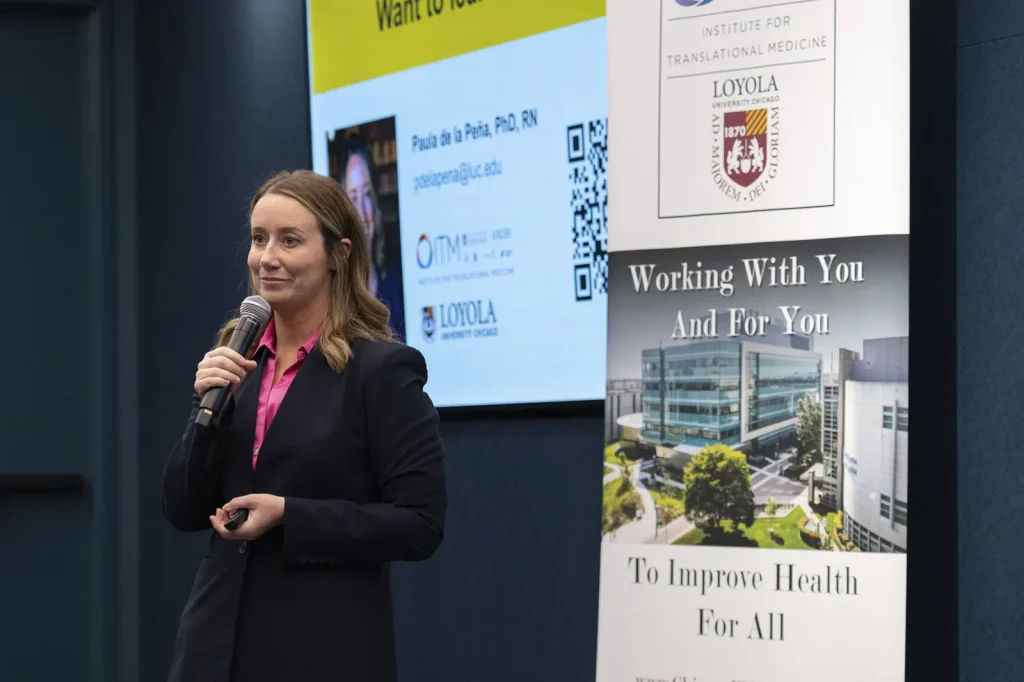
Paula de la Peña, PhD, RN, is a TL1 Postdoctoral Research Fellow at the Loyola University of Chicago Marcella Niehoff School of Nursing. Her talk was voted the crowd favorite and strongest use of science communication skills to connect with non-experts.
De la Peña is a neuro ICU nurse and researcher focused on improving life after stroke, which affects someone in the U.S. every 40 seconds. While more people are surviving strokes, many leave the hospital without the support they need to fully recover. 

“People go home after their stroke and they don’t do well,” she said. “And we’re surprised as scientists… We have the newest technology. How come they’re back in the hospital? I have made this my life’s work to figure out what survivors are really saying.”


Using artificial intelligence, de la Peña analyzed more than 1,1000 clinical notes to capture symptoms describes in the patients’ own words. These details are often buried in medical records and overlooked.
Her work highlights a critical gap in stroke care, where patients share how they feel but the healthcare system isn’t always listening. By looking at patient-reported experiences, she hopes to get the data needed to improve long-term recovery for stroke survivors.
If you’re interested in teaming up or learning more, contact Paula at pdelapena@luc.edu.

Jong-Wook Ban, MD: Housing Instability’s Impact on Aging Chicagoans

Jong-Wook Ban, MD, Hospitalist an Instructor at the Section of Hospital Medicine at the University of Chicago, began with a story from his medical training of a patient whose unstable and unaffordable housing left her with no asthma medications and frequent visits to the emergency room.
Housing challenges affect millions of older adults in the U.S., far beyond those experiencing homelessness. Issues like high rent, unsafe living conditions, or having to move in with others are linked to serious health risks, including a much higher chance of dying. Yet despite the scale of the problem, it remains under-researched. 


“ In the research on housing, 93% of the studies focus on homelessness, which affects 150,000 [people],” said Ban. “Only 7% of the studies address housing challenges other than homelessness, which affects 24 million.” 
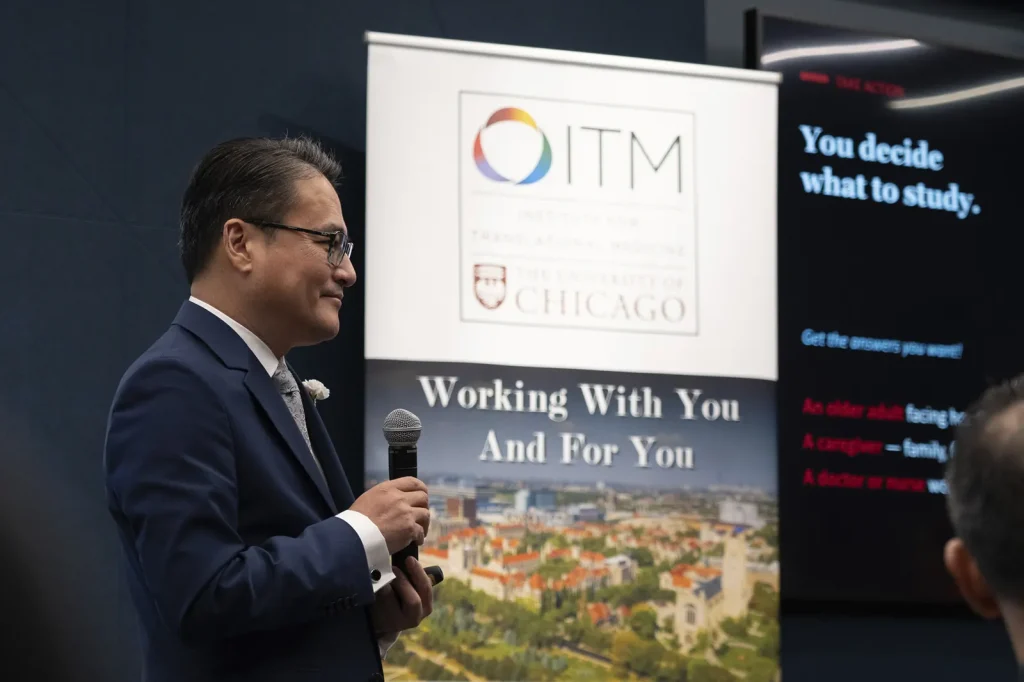

Ban’s work shifts how research questions are chosen. Instead of researchers deciding what to study, he’s using a community-driven approach that asks what questions matter most to the community. His goal is to ensure that studies reflect real needs. To help achieve that, he asked the audience members to participate in health research through a two-minute online survey that asked what questions related to homelessness they cared about the most.  


At the end of the project, we will publish the top ten most important questions,” said Ban. “Then, we’ll directly work with researchers and funders and turn these questions into real studies so that people like you shape the research meant to help all of us.”
If you’re interested in teaming up or learning more, contact Jong-Wook at jban@uchicago.edu.

Sparkle Springfield, PhD: How College Might Make or Break Your Heart Health

Sparkle Springfield, PhD, Assistant Professor of Public Health Sciences at Loyola University Chicago, explored how the college experience can shape long-term heart health.
While research shows that people with college degrees tend to live longer and have lower rates of heart disease, she emphasized that these benefits depend on actually completing college. About 30% of students don’t return after their first year, and one in five leave without finishing at all.
Springfield’s research looks at how stress, resilience, and access to resources during college influence both whether students stay in school and their long-term health. These experiences can act as a kind of training ground for how people manage challenges later in life.

“ It’s not just about making it to that end point and getting that degree,” Springfield said. “It’s also about how you get there and what the process is like, right? Because the process can cost us.”
College is a critical window for prevention she said. Better support systems in college could improve both graduation rates and lifelong health benefits. Universities can play a direct role in reducing future health risks by understanding and strengthening how students navigate stress and access resources, she said.
If you’re interested in teaming up or learning more, contact Sparkle at sspringfield@luc.edu.

About the Institute for Translational Medicine (ITM)

Chicago ITM
The Institute for Translational Medicine (ITM) helps you live your best life by making research breakthroughs happen and getting those discoveries into the real world to improve your health as soon as possible.
The ITM is part of a network of more than 50 CTSA Program-supported hubs across the country working to slash the time it takes to develop and share new treatments and health approaches. We work with you and for you to make participating in health research easy, so that together we improve health care for all.
Join the movement and learn more about how we help researchers, physicians, community members, industry, government organizations, and others. Visit us at chicagoitm.org and connect with us on Facebook, Twitter, Instagram, YouTube, and LinkedIn @ChicagoITM.

ITM Contact: Sara Serritella, Director of ITM Communications, serritella@uchicago.edu 

This project is supported by the National Center for Advancing Translational Sciences (NCATS) of the National Institutes of Health (NIH) that supports the Institute for Translational Medicine (ITM) through Grant Number UL1TR002389.

Want to be an ITM Insider? Tell us what you want to know and we'll send it direct to your Inbox.